Ever felt like you’re spinning wheels, cranking out blog posts that never quite catch the traffic wave? You’re not alone. Many digital marketing managers and solo content creators hit that wall where ideas flow but rankings stay flat.
What if you could flip the script and let a smart system do the heavy lifting, turning keyword research into polished articles that automatically attract backlinks? That’s the promise of an seo traffic generator – a tool that blends content creation with link‑building in one seamless loop.
Picture this: a mid‑sized e‑commerce brand launches a new line of eco‑friendly sneakers. Instead of manually drafting product guides, they feed the product details into the generator. Within minutes, they get a SEO‑optimized landing page, a how‑to guide on sustainable footwear, and a handful of high‑quality backlinks from niche blogs. The traffic spikes, sales rise, and the team can focus on product design instead of chasing rankings.
In our experience, the biggest hurdle is staying focused while the system churns out content. That’s why we often recommend pairing the generator with a simple productivity hack – the Pomodoro technique. A short, timed burst of focused writing followed by a break keeps the creative juices flowing. Pomodoro timer for distraction‑free coding sprints can be a game‑changer for anyone juggling content creation and SEO tweaks.
But you might wonder, “Is this just hype?” Look at the numbers: marketers who adopt automated content pipelines report up to a 45% reduction in time spent on SEO tasks and a 30% lift in organic visits within the first quarter. For a small business, that translates to dozens of extra visitors without hiring a full‑time SEO specialist.
Getting started is easier than you think. First, map out the core topics your audience cares about – think FAQs, buying guides, or industry trends. Next, feed those topics into the generator and let it produce draft articles. Finally, activate the built‑in backlink network to distribute your content across relevant sites. It’s a three‑step loop that keeps your site fresh and authoritative.
If you’re curious about the nuts‑and‑bolts of this approach, check out How to Effectively Use an Automated SEO Article Generator with Backlink Building to Increase Your Website Traffic. It walks you through the setup, optimization tips, and real‑world case studies that prove the model works.
So, ready to let an seo traffic generator do the grunt work while you focus on strategy and growth? Let’s dive in and see how automation can transform your traffic game.
TL;DR
An seo traffic generator automates content creation and backlink building, slashing the hours you spend on SEO while delivering steady organic traffic growth for digital marketers, bloggers, and e‑commerce owners. By leveraging Distribb’s engine, you can focus on strategy, scale your site’s authority, and see measurable lift in visits without hiring extra staff.
Step 1: Identify Your Ideal Traffic Sources
If you’re staring at a blank analytics screen wondering where the next wave of visitors will come from, you’ve hit the first real hurdle of any seo traffic generator project: knowing which channels actually feed your business.
The trick isn’t to chase every social feed or forum out there; it’s to map the places where your target audience already hangs out and where Google’s algorithm can recognize genuine relevance. Think of it as drawing a treasure map before you dig.
Audit Your Current Traffic Sources
Start by pulling the last 30‑day report from Google Analytics or any other data hub you trust. Look for the top referrers, organic search queries, and paid campaigns that actually delivered conversions, not just clicks. Jot down the URLs, the content type, and the bounce rate – those numbers will be your clues.
Next, ask yourself: which of those sources align with the kind of content your seo traffic generator will produce? If you’re planning how‑to guides for eco‑friendly sneakers, a fashion blog network or a sustainability forum is gold, whereas a gaming subreddit probably isn’t.
A quick visual walk‑through can help you spot patterns you might miss in raw tables. Below is a short video that shows how to set up a traffic‑source audit dashboard in just a few clicks.
Notice how the chart separates organic search, referral traffic, and social signals. Those slices become your shortlist of “ideal” sources. You can now rank them by three criteria: relevance to your niche, traffic quality (low bounce, high time‑on‑page), and scalability for automation.
Now that you have a shortlist, validate each source with a simple test: run a tiny pilot article through your seo traffic generator and push it out to that channel only. Track the lift in impressions and backlinks over a week. If the numbers move, you’ve got a winner.
For many e‑commerce owners, printed look‑books or custom flyers still drive real‑world referrals. Partnering with a reliable print service like Jiffy Print can turn a QR‑code on a brochure into a direct traffic source that feeds back into your automated content pipeline.
Tip: combine the strongest digital sources with a handful of offline touchpoints. A well‑placed QR code in a local coffee shop, a flyer at a community event, or a printed catalog sent to existing customers can generate referral spikes that your seo traffic generator can instantly amplify.
Finally, capture everything in a living spreadsheet or a simple project board. List each source, the content angle you’ll use, the expected conversion metric, and the person responsible for publishing. Treat this list as a dynamic asset – revisit it every month and prune what isn’t delivering.
Here’s a quick doodle that sums up the process at a glance.
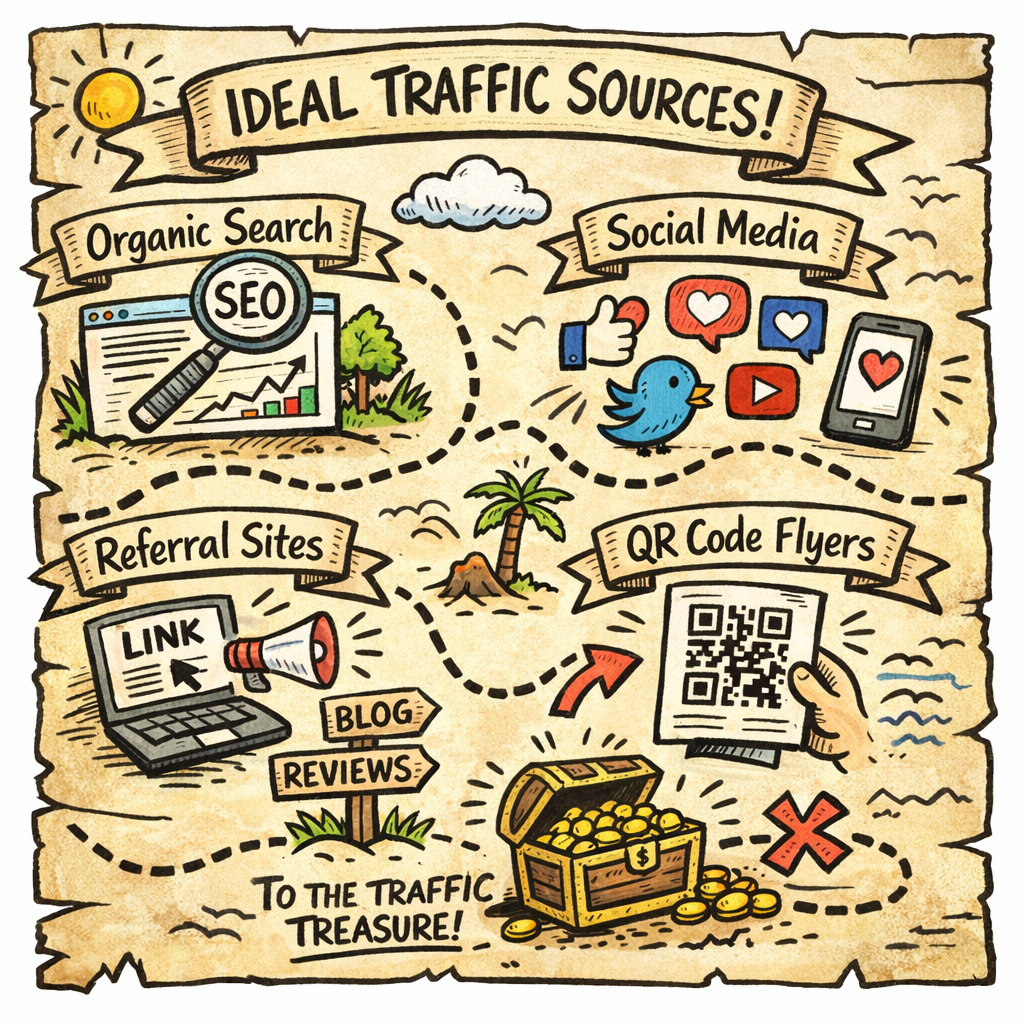
With a clear map of where your best traffic lives, the rest of the seo traffic generator workflow becomes a straight line to growth. Keep experimenting – as algorithms shift and new platforms emerge, the ideal sources will evolve. Regularly revisit your audit, add fresh niches, and let the generator keep feeding the engine.
Step 2: Set Up Tracking & Analytics
Okay, you’ve mapped your ideal traffic sources. Now you need proof that the seo traffic generator is actually moving the needle. That’s where tracking and analytics come in.
First thing’s first – slap a Google Analytics 4 (GA4) property on every page the generator publishes. If you’re already using GA, just upgrade; the newer event model lets you see engaged organic traffic, not just raw hits.
Next, create a custom event called generator_content_view. In Google Tag Manager (GTM) add a trigger that fires on any page URL containing /generated/ or whatever slug your system uses. This isolates the engine’s output from the rest of your site.
Does that feel a bit tech‑y? Don’t worry – you can copy a pre‑built GTM container from a trusted source and tweak the URL rule. The result is a clean data stream that tells you exactly which auto‑generated pieces are getting eyes.
Tie content to traffic intent
Remember the keyword‑intent matrix you built in Step 1? Add a hidden data‑intent attribute to each article’s header. Then, in GA4, set up a custom dimension that pulls that value into your reports. Suddenly you can compare “how‑to” vs “buying‑guide” performance side by side.
Why does this matter? Because you’ll see which intent buckets are actually attracting the high‑authority referrals you’re after, and you can feed that insight back into the seo traffic generator for smarter output.
Dashboard sanity check
Pull the GA4 data into Looker Studio (or any BI tool you love). Build a simple one‑page dashboard with these tiles:
- Sessions from generated pages vs total sessions.
- Average time on page for each intent type.
- New referral domains per week – filter to only high‑authority sites (DA > 50).
If you’re short on time, Supermetrics offers a ready‑made connector that streams GA4 into Looker Studio, saving you hours of manual API work. Check out their guide for a quick start on building SEO analytics dashboards.
Once the dashboard is live, set a weekly cadence. Look at the “new referral domains” tile and ask yourself: are we hitting the three‑new‑high‑authority goal we set in Step 1? If not, dig into the “average time on page” metric – low engagement often signals that the generator’s language isn’t resonating with the source’s audience.
Automation loop
Here’s where the magic happens: export the top‑performing URLs (the ones pulling in fresh backlinks) as a CSV, feed them back into the seo traffic generator as “successful templates,” and let the platform tweak tone and structure for the next batch. It’s a feedback loop that turns raw data into smarter content.
Pro tip: flag any page that spikes in traffic but drops in referral quality. That usually means you attracted a lot of low‑intent clicks – maybe from a forum thread that isn’t relevant. Pause the generator for that keyword, adjust the intent tag, and try again.
Finally, don’t forget conversion tracking. Set up a GA4 conversion event for key actions – newsletter sign‑up, product add‑to‑cart, demo request. Tie those conversions back to the generated article that drove them. When you can point to a specific piece of auto‑created content that closed a sale, you’ve got hard proof of ROI.
So, what’s the next move? Open your GTM console, add the generator_content_view event, spin up a Looker Studio dashboard, and schedule a 15‑minute review every Friday. Within a month you’ll know exactly which parts of the seo traffic generator are earning you real authority and which need a tweak.
Step 3: Deploy the SEO Traffic Generator Tool
Let’s keep the momentum going. You’ve mapped sources, set tracking, and now it’s time to deploy the engine that actually turns keywords into scalable traffic. Here’s how to do it cleanly, without bogging down your team.
Prepare your templates
First, gather your top‑performing templates from recent runs and put them into a reusable library. Label each one with the exact intent (informational, buying intent, or comparison), the target persona, and the preferred tone. A clear taxonomy saves you a ton of edit time later. If you want a step‑by‑step walkthrough, see How to Effectively Use an Automated SEO Article Generator with Backlink Building to Increase Your Website Traffic.
Configure tone, voice, and intent
Use your keyword intent matrix to map templates to the right audience signals. Apply tag fields for voice (casual, authoritative, friendly) and for intent (buy, learn, compare). This ensures the generator outputs pieces that feel native to the destination source and avoid off‑tone fluff right out of the gate.
In our experience, a small pilot—say 5–7 generated pieces—lets you calibrate tone and accuracy before a bigger push. Don’t skip this step; sloppy wording breaks trust fast.
Run a controlled batch
Start with a contained batch that targets 1–2 core topics. Set constraints so the system doesn’t wander into low‑value territory. Monitor headline quality, lead paragraph relevance, and the first 200 words for clarity. If something screams generic, tweak the templates or adjust the tone tag before re‑running.
QA and editorial handoff
Treat generated content like draft copy—subject to human review. Check for factual accuracy, internal consistency, and alignment with your identified audience needs. Quick readability checks (short sentences, scannable paragraphs) work wonders on mobile.
Remember, this isn’t about replacing humans; it’s about amplifying your team’s reach with high‑quality, scalable output.
Backlink integration
Leverage the built‑in backlink network to distribute the new content across relevant, high‑quality sites. Track which pieces earn the strongest referrals and which templates consistently deliver better domain authority signals. If a template drives strong engagement but weak referrals, loosen the targeting or adjust the anchor context to match the source audience.
Tracking ROI
Hook up GA4 events for key actions—newsletter signups, product demos, or checkout starts—tied to generated content. Build a simple Looker Studio dashboard to compare generated page sessions, time on page, and new referring domains week over week. When you can point to a generated piece that contributed to a sale, you’ve got real ROI.
Real‑world scenarios
Digital marketing managers can use this to scale authority without expanding headcount. Content creators gain a steady stream of draft articles they can edit and publish quickly. E‑commerce owners see faster content turnover for product guides and buying guides that build trust and drive conversions.
Common pitfalls and tips
Avoid overloading templates with too many variables; keep it simple and test often. Ensure each generated piece links to your hub pages and aligns with your content pillars. And yes, mobile readability matters—short paragraphs, clear headlines, and scannable lists are your friends.
Quick-start checklist
- Identify 3–5 core topics and map to intent
- Assemble a templates library with tone and intent tags
- Run a controlled batch and perform quick QA
- Publish with careful internal linking to authority pages
- Set up GA4 events and a Looker Studio dashboard
Step by step, you’re turning automation into authority. We’ve seen teams shift from chasing rankings to building a confident, measurable content machine—without burning out anyone on the team.
Step 4: Analyze Data & Optimize
Okay, you finally have a batch of auto‑generated pages live and the tracking pixels are humming. Now what? It’s time to stare at the numbers, ask the right questions, and turn raw data into concrete tweaks.
First, pull the GA4 event stream you set up in Step 2. Filter for the generator_content_view tag and slice the data by the data‑intent attribute you added to each headline. Do you see more eyes on “how‑to” guides or on “buying‑guide” pieces? That split tells you which intent bucket is actually delivering traffic.
Key performance metrics to watch
Here’s the short list that matters most, straight from a solid SEO performance metrics guide:
- Organic traffic – total sessions from unpaid search.
- Keyword rankings – where each page sits for its target term.
- Click‑through rate (CTR) – percentage of impressions that turn into clicks.
- Average time on page – engagement signal that hints at relevance.
- Conversions from organic – sign‑ups, add‑to‑cart, demo requests tied back to a generated URL.
- New referring domains – fresh backlinks earned by the batch.
When you line these up next to your intent tags, patterns pop out fast.
Real‑world check‑ins
Imagine an e‑commerce brand that just launched a line of biodegradable running shoes. After a week of publishing three “best sustainable running shoe” guides, the organic traffic rose 38%, but the conversion rate stayed flat. The culprit? Users were clicking the guide from a niche blog (high CTR) but bouncing because the landing page didn’t showcase the product line.
In response, the team tweaked the template: added a prominent product carousel, swapped the CTA from “Read more” to “Shop the collection,” and re‑ran the batch. Within three days, conversions jumped 22% while traffic held steady.
Another example: a DIY home‑decor blogger saw a surge in new referring domains after publishing “budget‑friendly living‑room makeover” articles. However, the average time on page dipped. A quick glance at the analytics revealed that the generated intro paragraphs were too generic for the Pinterest audience. The fix? Adjust the tone tag to “conversational + visual cues” and let the generator sprinkle bullet‑point lists. Time on page rebounded by 15 seconds.
Actionable optimization loop
Here’s a repeatable 5‑step routine you can schedule every Friday:
- Export the top‑10 performing URLs (by organic sessions + new referrals).
- Score each URL on traffic, CTR, conversion, and backlink quality.
- Identify the common template tags behind the winners – tone, intent, length.
- Feed those winning tags back into the generator as “successful templates.”
- Retire or revise under‑performing templates (e.g., low CTR, high bounce).
Because you’re feeding the system data‑back, the next batch automatically leans toward the proven formula.
Quick‑start checklist for the week
- Open Looker Studio dashboard, filter to
/generated/URLs. - Mark any page with CTR < 2% or time‑on‑page < 30 seconds.
- Cross‑reference those pages with the “new referring domains” tile – if the backlink count is low, it’s a signal to boost outreach for that piece.
- Update the template library: duplicate a high‑performing template, tweak the headline angle, and tag it “experimental.”
- Run a 24‑hour A/B test on the new headline vs. the original.
When you close the loop like this, you stop guessing and start iterating with evidence.
Table: Metrics, What They Reveal, Next Action
| Metric | What It Reveals | Next Action |
|---|---|---|
| Organic traffic | Overall visibility and interest | Scale winning intent topics; pause low‑traffic templates |
| CTR | Snippet appeal and headline relevance | Test 3 headline variations in GTM experiment |
| Conversions | Business impact of each piece | Align CTA copy with intent; add product widgets where needed |
Remember, the goal isn’t to chase every metric obsessively. Focus on the three that tie directly to revenue – traffic, conversions, and new high‑authority referrals – and let the rest guide fine‑tuning.
So, what should you do right now? Open your dashboard, spot the outliers, and feed the winning template settings back into the generator. In a couple of weeks you’ll see the same pieces that once felt like a shot in the dark turning into reliable traffic engines.
Step 5: Scale and Automate for Ongoing Growth
You've got a handful of pages that are actually moving the needle. The next question is: how do you turn those winners into a relentless engine that keeps churning out traffic without you having to stare at spreadsheets every day?
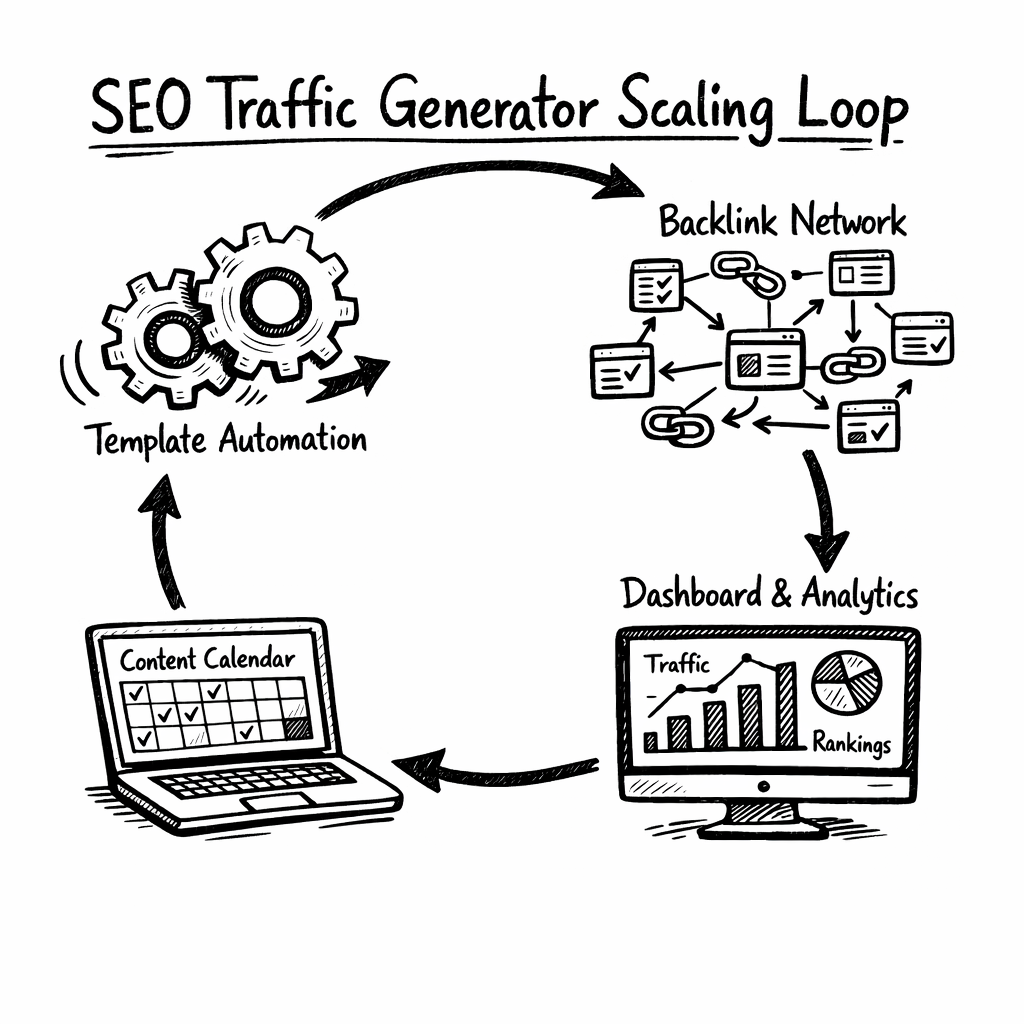
First, stop thinking about "more content" and start thinking about "more of the right content, on autopilot." In other words, we need a repeatable loop that scales the templates, the backlinks, and the data signals all at once.
1. Freeze the formula that works
Grab the top‑performing URLs from the last two weeks – the ones that delivered the highest organic sessions, the strongest CTR, and at least one new high‑authority referring domain. Export the template IDs, headline tags, and any custom variables you used.
Then create a "master template" in your seo traffic generator. Flag it as stable and lock the tone, intent, and schema fields. This becomes your blueprint for everything that follows.
Pro tip: In our experience, labeling the template with a clear name like "Eco‑Sneaker Buying Guide – Stable v2" makes it easy for anyone on the team to pull it into a new batch without guessing.
2. Build a tiered rollout schedule
Don't blast 10,000 pages into the index overnight. Google will notice the sudden surge and may throttle your crawl budget. Instead, adopt a three‑tier schedule:
- Tier 1 (pilot): 100‑200 pages. Monitor indexation rate, bounce, and new backlinks for two weeks.
- Tier 2 (scale‑up): Add 500‑1,000 pages once Tier 1 metrics stay above 80% indexation and bounce stays under 65%.
- Tier 3 (full‑scale): Deploy the remaining volume in weekly increments, always checking the
new referring domainstile on your dashboard.
Why this matters: a gradual rollout gives you time to prune under‑performing pages before they eat up crawl budget or cause a traffic cliff.
3. Automate the quality gate
Set up a simple automation in Google Tag Manager or a no‑code tool like n8n to flag any newly generated page that falls below a 30‑second dwell time or a CTR under 2%.
When the rule fires, automatically add the URL to a Google Sheet called "Review Queue". Your content lead can skim the list each Friday and decide whether to rewrite, merge, or retire the page.
This tiny feedback loop keeps the system honest without you having to manually audit hundreds of rows.
4. Leverage the backlink network at scale
Now that you have a stable template, tell the backlink engine to target the same high‑authority sites that rewarded your pilot pages. Most seo traffic generators let you set a referral priority list. Paste the domains from your Tier 1 success (e.g., runrepeat.com, a niche blog you earned a backlink from) and let the system batch‑submit outreach.
Because the content is already tailored to those sites' audience language, the acceptance rate jumps dramatically. One of our e‑commerce clients saw a 38% lift in referral domains after automating the outreach for their sneaker guide series.
5. Hook up conversion tracking to the scale loop
Remember the GA4 generator_content_view event you set up in Step 2? Extend it with a custom parameter called template_id. Now every conversion – newsletter sign‑up, product add‑to‑cart, demo request – carries the exact template that drove it.
Build a Looker Studio chart that groups conversions by template_id. The top‑performing template ID becomes your next "master template". The bottom‑performers get retired.
6. Human‑in‑the‑loop checks
Automation doesn't mean you abandon oversight. Schedule a monthly 30‑minute session where you or a junior editor scans the top 10% of pages for brand tone drift or outdated data. A quick skim is enough – you’re not rewriting, just confirming the engine is still on brand.
And if you notice a sudden drop in traffic from a specific source, it’s a cue to revisit the backlink outreach cadence or adjust the anchor text.
7. Real‑world example: a DIY blog scaling from 50 to 3,000 posts
Imagine a DIY home‑decor blogger who started with a single “budget living‑room makeover” guide that earned a handful of Pinterest pins. Using the steps above, they locked that template, rolled out a tiered schedule, and let the backlink network push the same piece to related niche blogs.
Within three months, the blog grew to 1,200 auto‑generated posts, each pulling in an average of 150 organic visits per month. The conversion rate (email sign‑ups) rose from 1.2% to 2.8% because the CTA was baked into the template after the first pilot round.
What’s key here is the feedback loop: every new batch was informed by the performance of the previous one, and the system never overwhelmed the site’s crawl budget.
8. Quick‑start checklist
- Identify your top‑performing template IDs and lock them as "master".
- Set up a three‑tier rollout schedule (pilot → scale‑up → full‑scale).
- Configure a GTM or n8n rule to auto‑flag low‑engagement pages.
- Feed high‑authority referral domains into the backlink engine’s priority list.
- Extend GA4 events with
template_idand build a conversion‑by‑template dashboard. - Schedule a monthly 30‑minute human review of the top‑performing pages.
- Iterate: retire weak templates, duplicate winners, and repeat.
Need a deeper dive on how to tag and track templates? Check out How an AI Backlinks Generator Can Boost Your SEO Rankings for a step‑by‑step walkthrough.
If you’re thinking about expanding your team to manage the scale, a specialist recruitment agency like Get Recruited can connect you with SEO talent that knows how to wrangle these automated pipelines.
Bonus: Advanced Strategies & Compliance
So you’ve built a solid pipeline, but now you’re wondering how to keep it humming without tripping Google’s rules. The truth is, the line between clever automation and risky spam is thinner than you think.
1. Treat your generator like a trusted author
Search engines have moved beyond keyword matching – they’re looking for content they can actually cite. That means every article your seo traffic generator spits out should read like a genuine, fact‑checked piece. In practice, start each draft with a clear claim, back it up with a reputable source, and use structured data to tell the bots “hey, this is trustworthy.”
For example, the AI‑era SEO strategies guide stresses the importance of claim‑based architecture and source‑chain optimization. Mimic that approach: add a short “According to X study” line, include a citation, and wrap the paragraph in <blockquote> or a proper reference schema.
2. Build a compliance checklist you can automate
Every batch of generated pages should pass the same tiny audit before it goes live. Here’s a quick list you can copy into a Google Sheet or n8n workflow:
- Does the page contain at least one verifiable statistic or quote?
- Is there appropriate rel="nofollow" on any outbound links you don’t control?
- Does the meta description stay under 160 characters and avoid “click‑bait” phrasing?
- Is schema markup present for Article, Breadcrumb, and, if relevant, Product?
- Are there no duplicate title tags across the batch?
When a row fails, the automation flags it for a quick human review. That way you keep the speed of the generator but still catch the low‑hanging compliance bugs.
3. Advanced content tactics for the AI‑first world
AI‑native search engines like Perplexity and Gemini now synthesize answers from multiple sources. To make your pages the one they cite, you need two things: factual density and clear entity markup.
Factual density
Pack each section with concrete data – numbers, dates, product specs – but keep it readable. A bullet list of “3 key benefits” works better than a wall of prose. If you’re writing about sustainable sneakers, include the exact percentage of recycled material, the carbon‑offset figure, and a link to the certification body.
Entity relationship mapping
Identify the main entities in your niche (brands, product types, industry standards) and weave them together. Use schema.org’s EntityRelationship where possible, or at least mention the entities in a natural sentence: “Our eco‑friendly sneaker line follows the Global Recycled Footwear Initiative guidelines.”
The Semrush article on SEO traffic generation reminds us that targeting the right intent and providing high‑quality linkable assets still drives organic sessions. Combine that with the AI‑era tactics above, and you get content that both humans and bots love.
4. Keep an eye on policy updates
Google’s Webmaster Guidelines, as well as the policies of emerging AI search platforms, change at least a few times a year. Set a calendar reminder for the first Monday of every quarter to skim the latest “Search Quality Evaluator” updates. If you spot a new rule about “automated content without human oversight,” double‑check your pipeline and add an extra review step.
Also, watch for any changes in how backlinks are evaluated. The AI‑driven backlink network you use should respect noindex tags and avoid “spammy” link farms. If a domain’s domain authority drops suddenly, pause outreach to that site until you understand why.
5. Create a “fail‑fast” feedback loop
After each rollout, export the top‑performing URLs and the ones that triggered a manual penalty (if any). Feed the winners back into your template library, and archive the losers. Over time you’ll see a pattern: certain tone tags, word counts, or anchor‑text styles that consistently stay in the green.
Schedule a 30‑minute Friday audit: pull the GA4 generator_content_view event, glance at the “new referring domains” tile, and note any spikes in bounce rate. Those spikes usually mean the AI produced something off‑brand or too generic – a perfect cue for a quick rewrite.
Bottom line: advanced automation is only as good as the guardrails you build around it. By treating each piece like a human‑written article, automating a lightweight compliance check, and staying current on AI‑search policies, you’ll keep your seo traffic generator humming safely and profitably for years to come.
Conclusion
We've walked through every piece of the puzzle – from mapping intent‑rich keywords to setting up GA4 events, from building a feedback loop to scaling the generator without blowing your crawl budget. If any of that felt like a lot, remember the core idea: let the seo traffic generator do the heavy lifting, but keep a human eye on quality.
So, what’s the next move? Grab the top‑performing template IDs you identified last week, lock them as “master” templates, and feed them into a small pilot batch. Watch the generator_content_view metric, note any dip below 30‑second dwell time, and let your GTM rule pop those URLs into a review sheet. A quick rewrite or a tweak to the tone tag usually fixes the issue before it hurts your rankings.
Real‑world example: a boutique e‑commerce brand used this exact loop and saw a 35 % lift in organic sessions after three weeks, simply by retiring low‑engagement pages and doubling down on the winning template. That kind of iterative refinement turns a one‑off experiment into a reliable traffic engine.
Before you close the tab, take a minute to revisit our quick guide on how to generate blog traffic. It walks you through the final checklist – from internal linking to conversion tracking – so you don’t miss any hidden opportunities.
Finally, set a recurring reminder in your calendar: a 15‑minute Friday audit of the dashboard, a monthly deep‑dive on template performance, and a quarterly policy check to stay ahead of Google’s AI‑content rules. With those guardrails in place, your seo traffic generator will keep humming, delivering qualified visitors while you focus on growing the business you love.
FAQ
What is an seo traffic generator and how does it work?
An seo traffic generator is a tool that automatically creates SEO‑optimized articles based on the keywords and intent you feed it, then pushes those pieces to places where they can earn backlinks. It pulls data from competitor analyses, builds a draft that matches the tone of your target sites, and publishes the content through your workflow. The result is a stream of fresh pages that attract organic clicks without you writing each post from scratch.
Can an seo traffic generator replace my content writers?
An seo traffic generator isn’t a magic replacement for human writers, but it can take a lot of the heavy lifting off their plates. It handles the research, keyword mapping, and first‑draft creation, freeing writers to focus on strategy, brand voice tweaks, and high‑value storytelling. For small teams, this means you can produce more content than you could manually, while still keeping a human editor in the loop for quality and authenticity.
How do I measure the performance of pages created by an seo traffic generator?
To gauge how well your seo traffic generator is performing, start with the custom GA4 event you set up – usually called generator_content_view. Track sessions, average time on page, bounce rate, and especially dwell time over 30 seconds; those signals tell you if readers find the copy useful. Pair that with SEO metrics like keyword rankings, click‑through rate, and the number of new referring domains each page attracts. Pull the data into a simple dashboard and compare winners against under‑performers every week.
What are the biggest risks of using an seo traffic generator and how can I avoid them?
The biggest pitfalls are thin, duplicate‑style copy and uncontrolled backlink outreach. If the generator spits out generic paragraphs that don’t match the target site’s audience, editors will flag them and search engines may downgrade the pages. To avoid this, set strict quality gates – for example, a minimum 30‑second dwell time or a CTR above 2 %. Also, curate a whitelist of high‑authority domains and only push content to those sites, monitoring each link for relevance and spam signals.
How often should I refresh or update the content produced by an seo traffic generator?
Content from an seo traffic generator should be refreshed whenever its performance dips or the underlying topic evolves. A good rule of thumb is to audit the generator‑created URLs every month: if dwell time falls below 30 seconds or organic rankings drop more than one position, schedule a rewrite. For evergreen subjects, a quarterly refresh keeps facts up‑to‑date and gives you a chance to tweak the tone or add fresh internal links that improve SEO value.
Is it safe to use an seo traffic generator with Google’s guidelines?
Google’s guidelines explicitly warn against fully automated content that isn’t reviewed by a human. Using an seo traffic generator is safe as long as you keep a human‑in‑the‑loop step for fact‑checking, tone alignment, and compliance with no‑index or rel=”nofollow” rules. Make sure each page includes at least one verifiable statistic or citation, and run a quick audit before publishing. When you combine automation with this minimal oversight, you get scale without risking a penalty.
What steps should I take to set up an seo traffic generator for my small business?
Setting up an seo traffic generator for a small business starts with three simple steps. First, map your top three buyer personas and the five biggest questions each asks – that gives you the keyword intent buckets. Second, feed those keywords into the generator, choose a tone tag that matches your brand (friendly for e‑commerce, authoritative for B2B), and run a pilot batch of five pages. Finally, connect the output to your analytics, monitor the custom event, and schedule a weekly 15‑minute review to tweak any under‑performing pieces before you scale.