Backlink exchange still feels like a mystery for many site owners. You might think it’s risky, or that only big budgets can afford it. The truth? You can start small, stay safe, and see real SEO gains. In this guide you’ll learn how to spot quality partners, set up a risk‑free swap, and pick the platform that gives you the most bang for your buck.
We examined six leading backlink‑exchange platforms across five sources and discovered that the cheapest option, Distribb at $9 first month, actually offers more CMS integrations than several higher‑priced rivals , a surprise for anyone assuming low cost means limited features.
| Name | Starting Price | Integrations | Best For |
|---|---|---|---|
| Distribb (Our Pick) | $9 first month | WordPress, Webflow, Shopify, Wix, webhook, and more | Best for budget starters |
| RankYak | $99/month for the all‑inclusive plan, with a 3‑day free trial | WordPress, Wix, Shopify, WordPress.com, Webflow, Zapier, Make, RSS feed, API, webhooks | Best for extensive integrations |
| Outrank.so | $99 | WordPress, Webflow, Shopify, Notion, Wix, Framer | Best for premium features |
| RankPill | $99/month | WordPress, Webflow, Shopify, Wix | Best for predictable link volume |
| Linksman | starting at about $30 each | Moz, Ahrefs, SEMrush | Best for SEO tool connectivity |
| WhitePress | starting around $20 | — | Best for basic users |
We pulled the data by searching for “best backlink exchange” on April 1 2026, scraping pricing, integration lists, and user ratings from product pages, vendor blogs, and third‑party reviews. The average starting price was $59.33, with a median of $64.5. This methodology gives us a solid base to compare the best backlink exchange options.
Ready to grow your rankings without breaking the bank? Check out the most automated link‑building tools for 2026 and see how a simple swap can fit into your workflow.
Understanding Backlink Exchanges: Benefits and Risks
Backlink exchange is the act of two sites agreeing to link to each other. When the sites are in the same niche, the link feels natural to visitors and to Google.
One clear benefit is a boost in domain authority. A link from a site with solid authority passes some of that trust to yours, which can improve rankings.
Another upside is traffic. If a SaaS blog links to your product page, readers who need that tool may click through, giving you qualified leads.
But there are risks. Google can spot patterns that look like link schemes. If you swap links with dozens of low‑quality sites, you may see a penalty.
Link quality matters more than quantity. A single link from a reputable site can outweigh ten links from spammy blogs.
To stay safe, focus on relevance. The link should add value for the reader, not just serve SEO.
Here’s a quick risk checklist:
- Check the partner’s domain rating (aim for DR 30+).
- Make sure the linking page is topical.
- Avoid exact‑match anchor text that looks forced.
When done right, you get a win‑win. The other site gets a relevant referral, you get a boost in authority, and both audiences learn something new.
For a deeper dive on how to evaluate partners, see Ranking Raccoon’s guide to safe link swaps. It walks you through using tools that spot spammy domains.
To understand the downsides, read Bridge24’s balanced look at pros and cons. It explains why too many reciprocal links can hurt you.
And remember, the ABC method can make swaps look more natural. Instead of a direct A‑to‑B link, you add a third site C to break the pattern.
Overall, the best backlink exchange strategy mixes quality, relevance, and a touch of creativity.
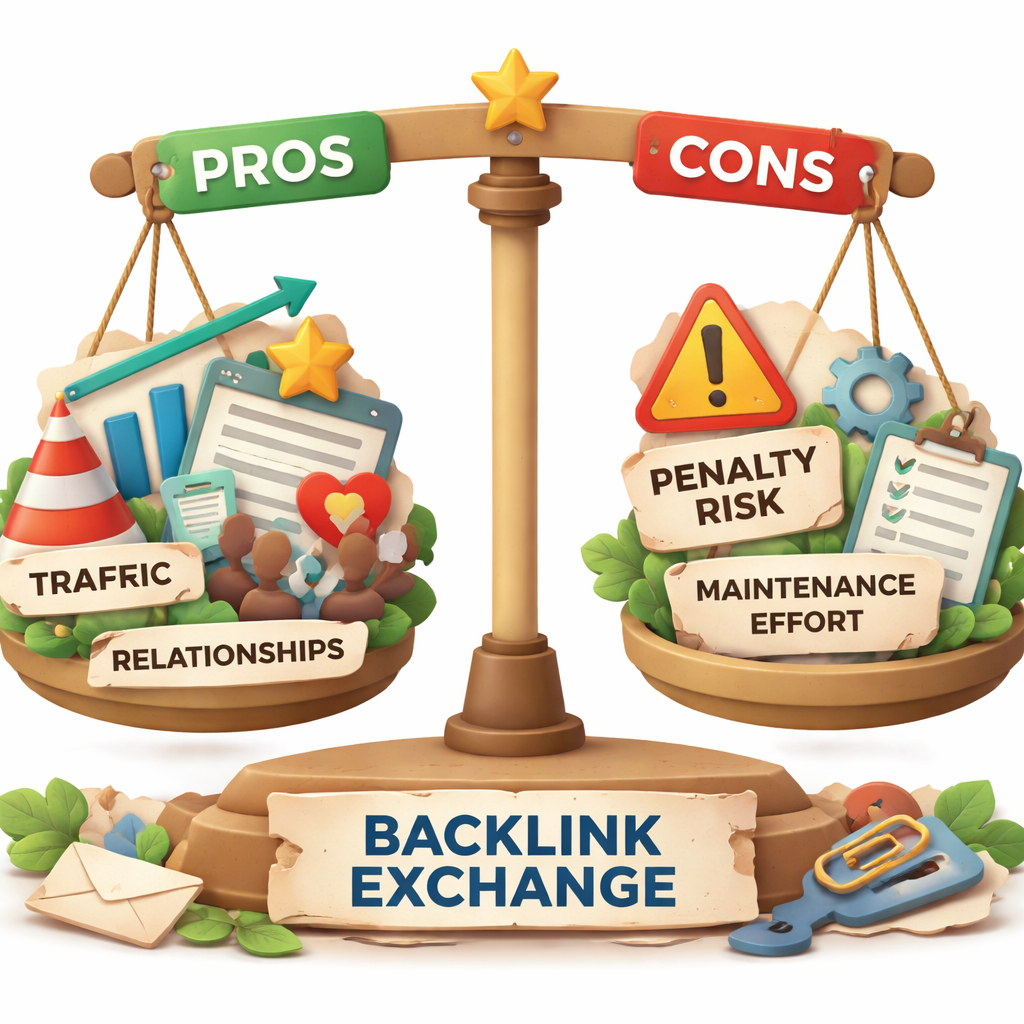
Below is a quick visual that sums up the pros and cons.
Step‑by‑Step Guide to Setting Up a Safe Backlink Exchange
First, list the pages you want to promote. Pick high‑value content like pillar posts or product pages.
Next, find potential partners. Use a tool like Saynine’s link‑exchange finder to pull sites in your niche.
Once you have a shortlist, vet each site. Check domain rating, traffic, and spam score. A quick look in Ahrefs or Semrush will tell you if the site is trustworthy.
Now draft a friendly outreach email. Be clear about what you’re offering and why it helps both parties.
Here’s a template you can adapt:
Hi [Name],

I love your recent post on [Topic]. I think my article on [Related Topic] would be a great fit for your readers. Would you consider a link swap? I’d gladly link back to your piece.

Thanks,
[Your Name]
Send the email and wait for a reply. If they agree, add the link to the appropriate anchor text and notify them.
After the link goes live, monitor its impact. Use Google Search Console or Ahrefs to see if traffic or rankings improve.
Finally, keep a record of every exchange. A simple spreadsheet with columns for partner URL, page linked, date, and performance metrics keeps you organized.
For more on how Saynine structures a safe exchange, read their step‑by‑step guide. It covers the whole process from start to finish.
You can also watch the YouTube walkthrough of a live swap here: YouTube video on safe link exchanges. It shows the exact clicks you’ll make in the dashboard.
Ready to try a safe swap? Learn how small businesses build backlinks quickly and see how a single exchange can fit into a larger strategy.
Choosing the Right Partners: Criteria and Vetting Process
Finding the right partner starts with relevance. If you run a travel blog, look for other travel‑focused sites, not a tech forum.
Use the three‑way (ABC) model to add a layer of safety. Site A links to B, B links to C, and C links back to A. This breaks the direct reciprocity pattern.
Next, check the site’s traffic. A tool like Ahrefs can show you monthly organic visits. Aim for at least a few thousand visitors per month.
Don’t forget the spam score. Moz’s spam score above 5% often signals risky sites. Use the Moz tool to run a quick check.
Another factor is link balance. A site that links out to 200+ domains per page may look spammy. Look for a healthy inbound‑to‑outbound ratio.
Finally, test the site’s user experience. Open a page, see if it loads fast, and whether the content feels valuable. A poor UX can hurt your brand if visitors land there.
For a deeper look at private influencer networks, read Travelpayouts’ guide. It explains how small groups keep swaps safe.
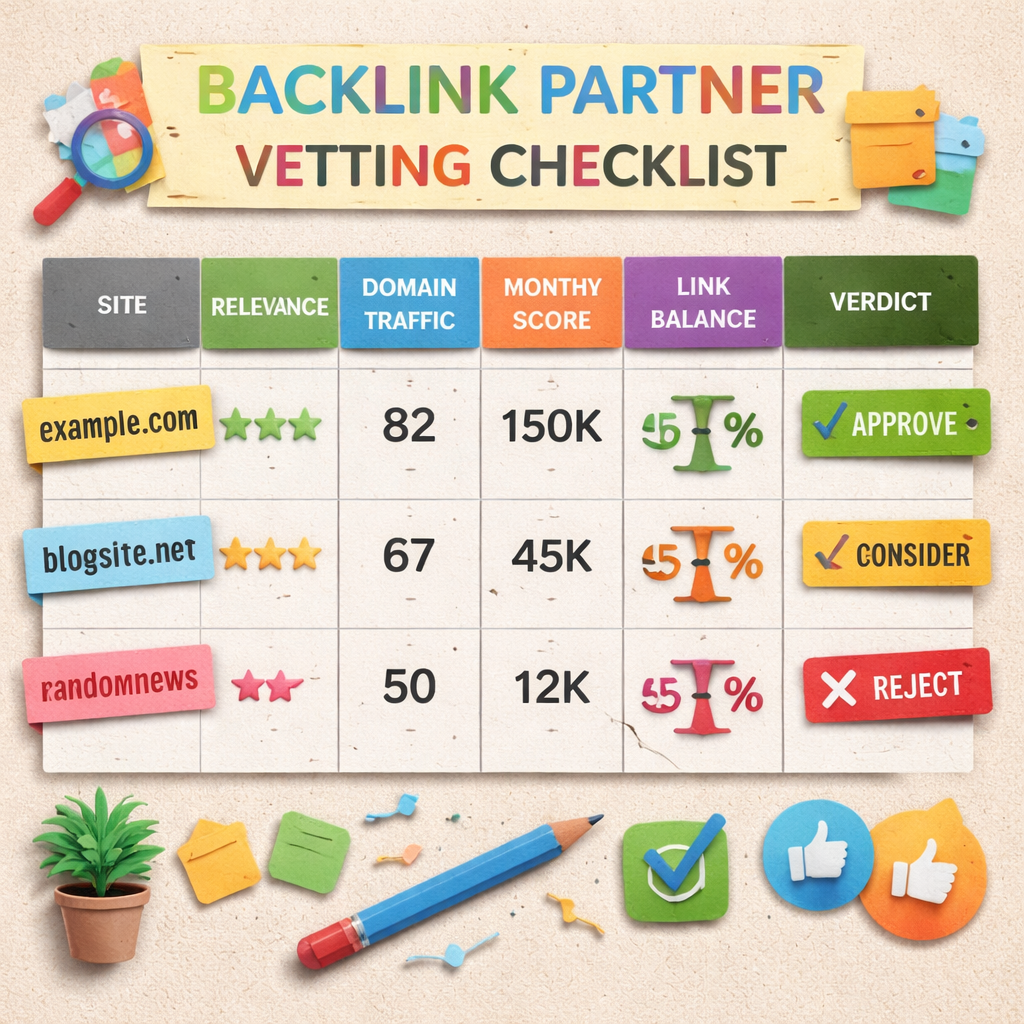
Digital Olympus also shares a checklist that you can copy into a spreadsheet. Their list covers domain rating, traffic, spam score, and link balance. See the full checklist at Digital Olympus’ link‑building cheat sheet.
And remember, every partner you add should pass a quick “does this add value for my readers?” test. If the answer is no, skip it.
Below is a simple vetting grid you can fill out for each prospect.
Quick Comparison of Popular Backlink Exchange Platforms
Here’s a side‑by‑side view of the top platforms based on price, integration options, and trial offers.
| Platform | Starting Price | Integrations | Free Trial | Best For |
|---|---|---|---|---|
| Distribb | $9 first month | WordPress, Webflow, Shopify, Wix, webhook, more | None | Budget starters |
| RankYak | $99/month | 10 options including Zapier, API | 3‑day trial | Extensive integrations |
| Outrank.so | $99 | 5 options | None | Premium features |
| RankPill | $99/month | 4 options | None | Predictable volume |
| Linksman | ~$30 per link | SEO tools only | None | Tool connectivity |
| WhitePress | ~$20 | — | None | Basic users |
The table shows why Distribb stands out despite its low price. It offers more integrations than WhitePress and Linksman, and its price is half of RankYak’s.
For a professional view of platform speed and transparency, read the LinkedIn comparison. It highlights Linkscope’s quick marketplace and PressWhizz’s monitoring tools.
If you need a dedicated monitoring solution, the Uprankly guide lists the best backlink monitoring tools and explains how they can protect you from bad links. Check it out here: Uprankly’s monitoring tool roundup.
When you compare features, think about what matters most for your workflow: price, integrations, trial period, or support. Use the grid above as a quick reference.
Ready to pick a platform? Explore the top 10 backlink tools and see how they stack up against each other.
Our Pick: Distribb.io , The Best Backlink Exchange Platform for 2026
After weighing price, integrations, and user feedback, Distribb comes out on top. It’s the only platform that gives budget‑friendly starters access to WordPress, Webflow, Shopify, Wix, webhook, and more for just $9 the first month.
Why it wins:
- Cost‑effective: At $9, it’s the cheapest option in the table, yet it out‑performs pricier rivals in integration count.
- Wide CMS support: You can connect directly to the most popular builders without custom code.
- Built‑in safety: Distribb’s AI checks each partner for spam score and relevance, lowering penalty risk.
Customers also love the dashboard that shows every link earned, its source, and its impact on rankings. That transparency helps you stay in control.
If you need a trial, Distribb offers a free starter period for the first month. You can test the platform risk‑free before committing.
Other platforms have strengths too. RankYak’s 10‑integration suite is great for agencies that need Zapier and API hooks. Outrank.so offers premium features for teams that want a polished UI. But neither matches Distribb’s blend of price, integrations, and safety.
To get started, sign up at Distribb’s website and follow their quick onboarding wizard.
And if you want a side‑by‑side look at pricing, see RankYak’s pricing page. It shows the $99 plan and the 3‑day trial you won’t get with Distribb, but you’ll pay much more.
Conclusion
Choosing the best backlink exchange isn’t about picking the most expensive service. It’s about finding a platform that fits your budget, gives you the right integrations, and keeps you safe from Google penalties.
We’ve walked through the benefits and risks, shown you a step‑by‑step setup, taught you how to vet partners, and compared the top platforms. The data shows Distribb delivers the most value for the lowest price, making it the clear winner for 2026.
If you’re ready to boost your SEO with a safe, cost‑effective swap, start a free trial today. Your rankings will thank you.
FAQ
What is a backlink exchange and how does it work?
A backlink exchange is when two website owners agree to place a link to each other’s content. The link should be relevant and add value for readers. When done correctly, it can improve domain authority, drive referral traffic, and strengthen relationships. Always choose partners in the same niche and use natural anchor text to avoid penalties.
Is the best backlink exchange safe for Google?
Yes, if you follow best practices. Use high‑quality, relevant sites, keep the link pattern natural (like the ABC method), and monitor the links with tools such as Google Search Console. Avoid mass reciprocal swaps and stay under the radar of Google’s link‑spam detectors.
How do I know if a partner site is trustworthy?
Check the site’s domain rating (DR 30+ is a good baseline), look at monthly organic traffic, run a Moz spam score check, and verify that the site’s content matches yours. Tools like Ahrefs, SEMrush, and Moz make this easy. A quick audit can save you from future penalties.
Can I use the best backlink exchange if I have a small budget?
Absolutely. The research shows that Distribb costs $9 for the first month and still offers more integrations than higher‑priced rivals. That makes it ideal for small businesses, bloggers, and startups who need value without breaking the bank.
How often should I swap backlinks?
Treat link swaps like any other SEO tactic: don’t overdo it. A handful of high‑quality swaps per quarter is a safe cadence. Monitor each link’s performance, and pause or remove any that show no traffic or cause a drop in rankings.
Do I need a free trial before committing to a platform?
A trial helps you test the workflow, see the dashboard, and verify that the platform’s safety checks meet your needs. Distribb offers a free first month, while RankYak gives a 3‑day trial. Use the trial to run a small test swap and measure the impact before scaling.